Search Results for: "conservationism"
Relevance | DateMark Krebs: Digging Down on Energy Efficiency Claims (an interview)
By Robert Bradley Jr. -- June 16, 2016 7 Comments“DOE and its environmental allies are trying their best bypass the adaptation of full fuel-cycle analyses through their jihad against carbon; which includes natural gas, or at least its direct use. Apparently, natural gas is still considered to be “clean,” but only if burned in electric power plants.”
MR: Tell us about your interest in the energy efficiency debate from a natural gas perspective.
MEK: When I was a medic during Vietnam, I saw the crucial need for reliable and affordable energy in third-world countries I served in, such as vaccines for refrigeration. So researched and became aware of the term “appropriate technologies,” and I began reading works by Dr. Ernst Friedrich “Fritz” Schumacher. One book was Small is Beautiful.
While Schumacher wasn’t exactly advocating free markets, his writings certainly endorsed free, locally directed, choices as opposed to the imposition of central government dictation of energy programs.…
Continue ReadingThe Regulatory Assistance Project (RAP): Warring Against Gas
By Mark Krebs -- April 26, 2016 4 Comments“Perhaps in a new free-market era the functional equivalent of an anti-Lois Lerner will investigate such rent-seeking entities as the Regulatory Assistance Project. Meanwhile, be warned: RAP may soon be coming to a Public Service Commission or environmental program near you, if they haven’t been there already.”
The Regulatory Assistance Project (RAP) may be one of the most influential “clean energy” not-for-profit organizations you’ve probably never heard of. RAP’s long-standing general policy to keep off the radar screen may be changing as this organization becomes emboldened by their own rhetoric. But behind the scenes, RAP is effectively demoting gas-fired end-use technologies, including cogenerated power capacity, in favor of renewables and forced efficiency that favors electrification.
In the beginning, RAP was involved with electric utility rate-case proceedings before state utility commission’s in the area of “energy efficiency.”…
Continue Reading“Grid-Enabled” Water Heating: “Deep Decarbonization” as Crony Environmentalism (Part II)
By Mark Krebs -- March 10, 2016 No Comments[Editor note: An under-the-radar energy intervention is to force fossil-fuel fired water heating to go electric “regardless of adverse economic impacts,” as Mark Krebs explains in this post and Part I yesterday.]
Why should electricity monopolize energy if gas-fired alternatives are more economical as determined by self-interested consumers?
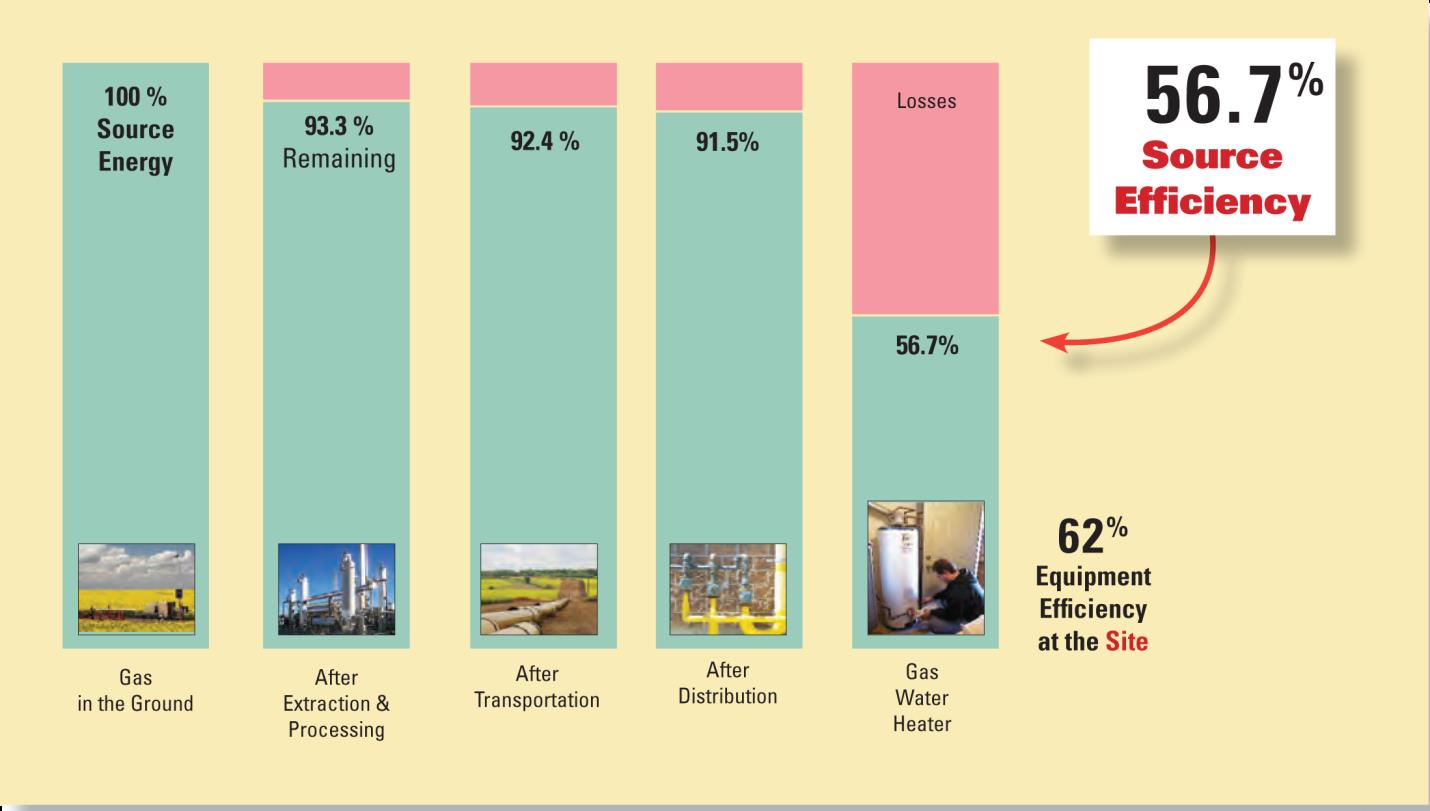
If the objective is low carbon water heaters, there are more direct means of doing so. The following graphics compare the full fuel-cycle efficiencies of traditional gas water heater to electric water heaters:
Gas Storage Water Heater Site and Source Energy Efficiency
Electric Resistance Storage Water Heater Site and Source Energy Efficiency
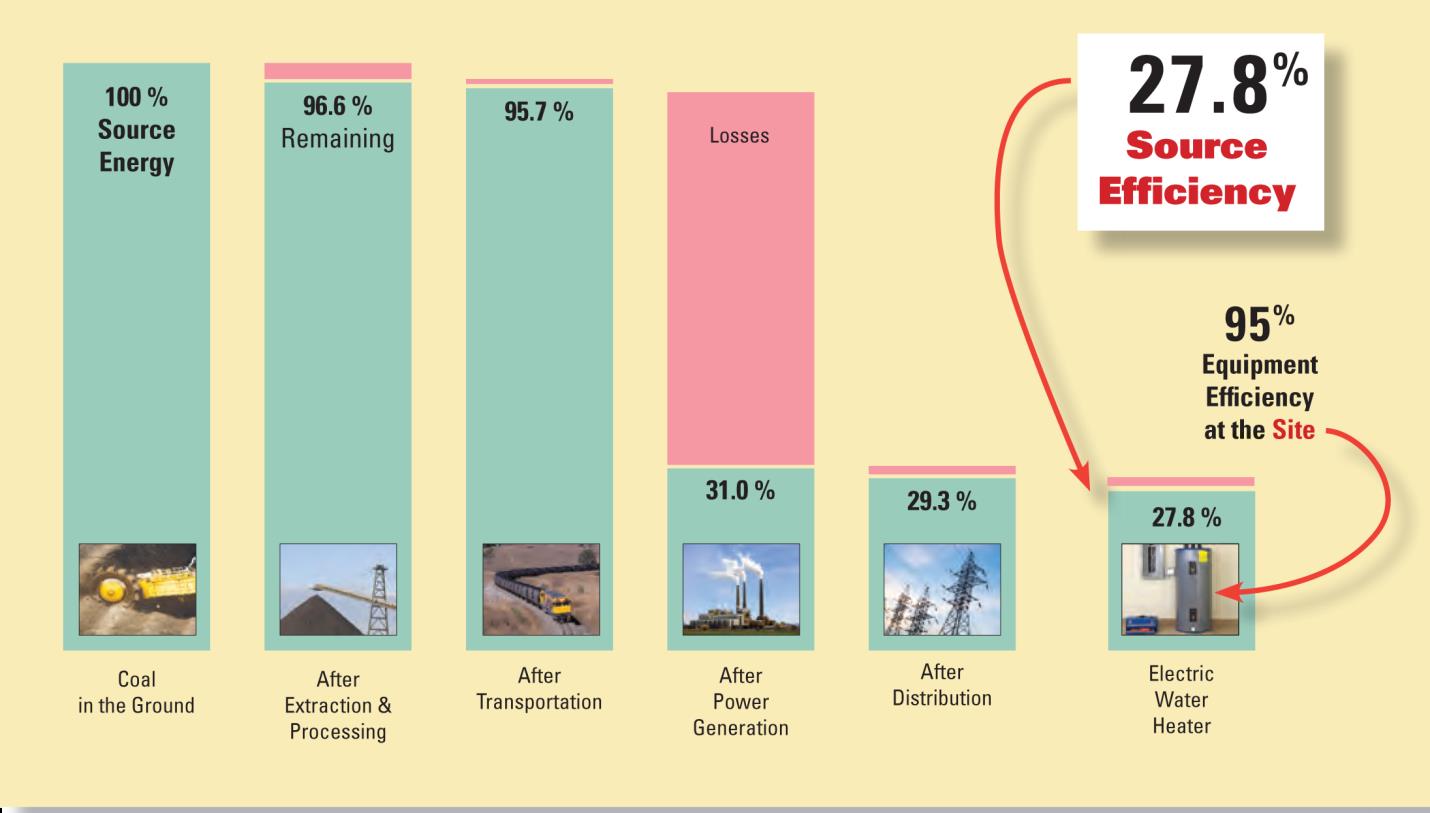
Note: The previous two graphs are used with permission form the Gas Technology Institute
The electric utility industry prefers a site-based energy efficiency metric because it can indicates that switching to an electric resistance water heater from a gas water heater can “save” over 30% more energy. …
Continue Reading“Grid-Enabled” Water Heating: “Deep Decarbonization” as Crony Environmentalism (Part I)
By Mark Krebs -- March 9, 2016 6 Comments[Editor note: An under-the-radar federal energy intervention is to force fossil-fueled water heating to go electric “regardless of adverse economic impacts,” as Mark Krebs explains in this post and Part II tomorrow.]
In March of 2015, MasterResource.org published my article, Giving (tax) Credit Where Credit Isn’t Due: “Geothermal” Heat Pumps (and beyond) where I asked: “So what’s next, calling toaster ovens and electric resistance water heaters renewable?”
Apparently, the answer is electric resistance water heaters since they are now being depicted (unwittingly or otherwise) as “batteries” for thermally storing “clean” electric energy. But toasters may not be far behind. The following article is about the latest rash of “crony environmentalism” under the guise of “deep decarbonization” through increased electrification of everything possible; regardless of adverse economic impacts.
Introduction & Background
For better or worse, Congress has delegated broad authority to the Department of Energy (DOE) to mandate minimum energy efficiency standards for most major (and many minor) residential and commercial energy consuming products.…
Continue Reading