Search Results for: "Mark Krebs"
Relevance | DateDOE’s EERE: Reform Ideas for Secretary Perry
By Mark Krebs and Tom Tanton -- March 6, 2017 1 Comment“Back in 1977 when the US Department of Energy (DOE) was established, a major part of its mission was to help protect American from the OPEC cartel. While the mission has changed in recent years towards mitigating ‘anthropogenic’ climate change, a trace of consumer focus still exists and should be reemphasized.”
“With a renewed focus on energy consumers and less on environmental cronyism, DOE can gain newfound respect from the American public and help drive a resurgent economy.”
On February 24, a Presidential Executive Order, Enforcing the Regulatory Reform Agenda, was signed by President Trump which, according to Bloomberg News, “will impose additional oversight on government regulations, designating officials within government agencies who will monitor rule-making and identify needed policy changes.”
Earlier on Wednesday, January 25, 2017, E&E Daily published an article titled “Barton, Perry to team up on plan to ‘revamp’ agency.”…
Continue ReadingFederal Energy Efficiency Mandates: DOE’s End Run vs. the Public Interest (Part II)
By Mark Krebs and Tom Tanton -- January 31, 2017 14 Comments“Perhaps most important is the self-fulfilling prophesy: if renewables are made to look more attractive, they’ll increase in actual use. As they increase in use, according to the EERE Guidance document but not reality, they look more favorable. Rinse and repeat.”
“The net effect of the “guidance” is to artificially discriminate against one of America’s most abundant and cleanest energy forms, natural gas.”
“… we believe DOE should rescind this report and any applications of it within Federal policies and regulations.”
Part 2 identifies some of the more egregious technical flaws in EERE’s “Accounting Conventions for Non-Combustible Renewable Energy Use.” Part I yesterday discussed process deficiencies.
Despite the innocuous appearance of an RFI, what EERE ultimately did was to issue a “Technical Report” which, in fact, is more far-reaching than just “guidance” and would impact a multitude of state and federal programs.…
Continue ReadingFederal Energy Efficiency Mandates: DOE’s End Run vs. the Public Interest (Part I)
By Mark Krebs and Tom Tanton -- January 30, 2017 3 Comments“EERE inappropriately colluded with NRDC, and some in the electric industry, to its predetermined and self-serving conclusions. Clearly, EERE’s mission is to promote energy efficiency and renewable energy. This fact makes them biased, consciously or unconsciously. They are an inappropriate custodian of such metrics.”
“Originally limited to technology development, assessment and promotion, some offices in DOE are now using the cudgel of regulation and ‘guidance’ to ensure their favored technologies ‘win’ regardless of the national interest.”
“Taking the form of an RFI, the proposed change is both procedurally and technically deficient, resulting in regulatory guidance that is discriminatory and lacks basis.”
This is Part 1 in a two-part article about an abuse of the Request for Information (RFI) process at the Department of Energy’s Office of Energy Efficient and Renewable Energy (EERE).…
Continue Reading“Grid-Enabled” Water Heating: “Deep Decarbonization” as Crony Environmentalism (Part II)
By Mark Krebs -- March 10, 2016 No Comments[Editor note: An under-the-radar energy intervention is to force fossil-fuel fired water heating to go electric “regardless of adverse economic impacts,” as Mark Krebs explains in this post and Part I yesterday.]
Why should electricity monopolize energy if gas-fired alternatives are more economical as determined by self-interested consumers?
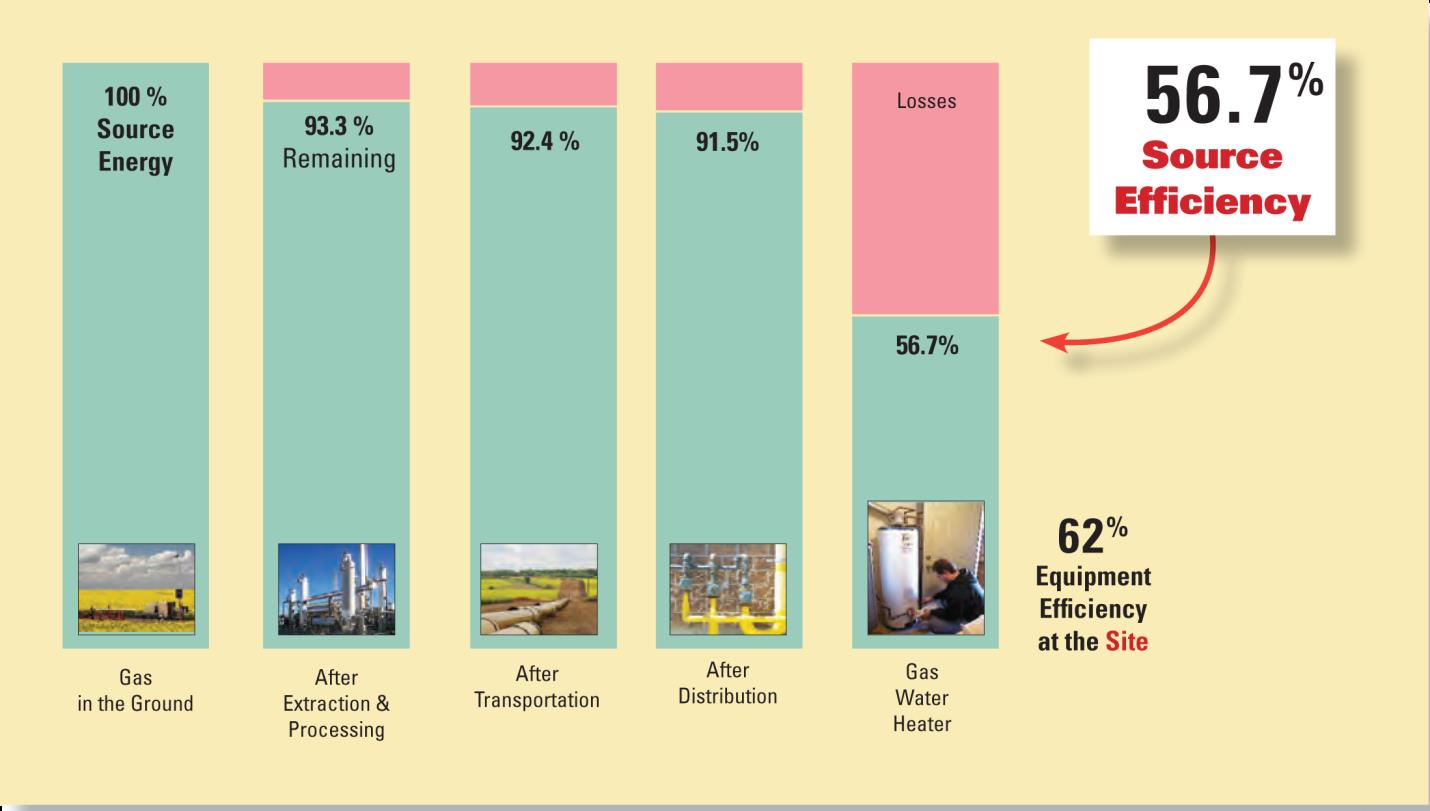
If the objective is low carbon water heaters, there are more direct means of doing so. The following graphics compare the full fuel-cycle efficiencies of traditional gas water heater to electric water heaters:
Gas Storage Water Heater Site and Source Energy Efficiency
Electric Resistance Storage Water Heater Site and Source Energy Efficiency
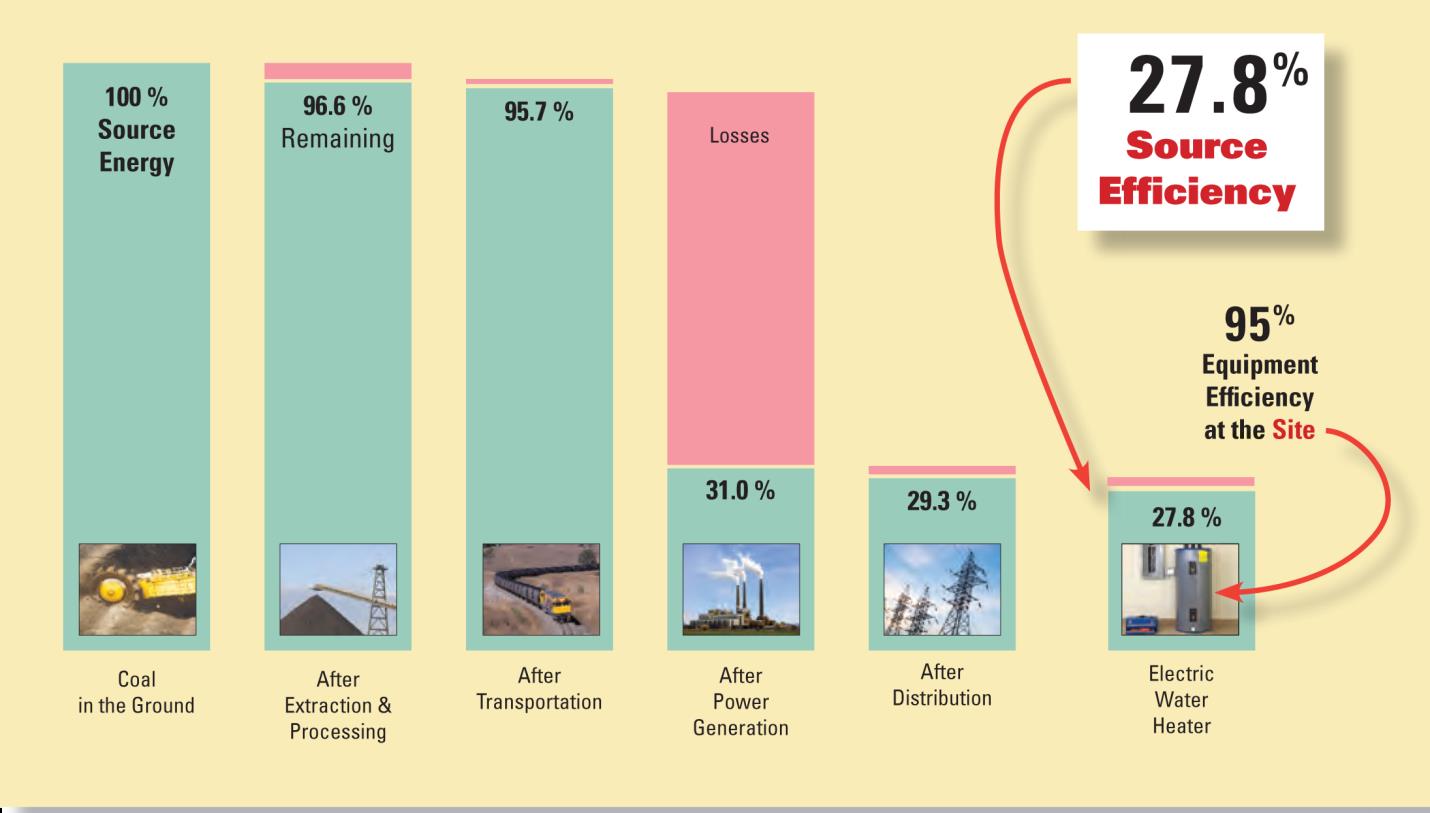
Note: The previous two graphs are used with permission form the Gas Technology Institute
The electric utility industry prefers a site-based energy efficiency metric because it can indicates that switching to an electric resistance water heater from a gas water heater can “save” over 30% more energy. …
Continue Reading