Robert L. Bradley Jr.: Champion of Energy Realism and Free Markets
By Stephen Heins -- May 4, 2026“Robert L. Bradley Jr. has never chased trends or grants. He has followed the evidence—market signals, engineering realities, and the record of human progress under freedom. In doing so, he has educated generations of policymakers, students, and citizens about why energy abundance matters and how free markets deliver it best.”
In the often polarized world of energy policy and climate debate, few voices have offered such consistent, evidence-based clarity as Robert L. Bradley Jr. A Houston native, prolific author, founder of the Institute for Energy Research (IER), and creator of the influential free-market energy blog MasterResource.org, Bradley has spent more than four decades illuminating the interplay of markets, regulation, technology, and human ingenuity in powering modern civilization.
As we mark the ongoing relevance of his work in 2026, a tribute to Bradley is not merely a look back at a remarkable career but a celebration of his enduring intellectual leadership—particularly in the last five years, when his analyses have proven prescient amid the unraveling of aggressive “energy transition” mandates.
Born in Houston on June 17, 1955, Bradley’s interest in energy ignited early. After earning a B.A. in economics from Rollins College (where he captained the tennis team and won the S. Truman Olin Award in economics), an M.A. from the University of Houston, and a Ph.D. in political economy from International College (with Murray Rothbard on his committee), he dove into the real world of energy markets.
A 1980 study on oil-reseller regulation for a Houston bank led to a Cato Institute grant and ultimately his monumental two-volume “Oil, Gas, and Government: The U.S. Experience” (1996)—a 2,000-page scholarly tour de force that took nearly a decade to publish.
Sixteen years at Enron (including as director of public policy analysis and speechwriter for Ken Lay) gave him an insider’s view of both market innovation and the perils of “political capitalism.” His memos from that era, archived at politicalcapitalism.org, remain required reading for understanding Enron’s corporate entanglement with government favoritism.
Bradley’s scholarly output is staggering: eight books, including “The Mirage of Oil Protection” (1989), “Julian Simon and the Triumph of Energy Sustainability” (2000), “Climate Alarmism Reconsidered” (2003), and the co-authored primer “Energy: The Master Resource” (2004), which Milton Friedman praised as a “splendid” debunking of energy-doom predictions.
Later works—“Capitalism at Work” (2009), “Edison to Enron” (2011), and “Enron Ascending” (2018)—form part of his ambitious Political Capitalism work. The capstone volume, “Contra-Capitalism: Enron and Beyond”, is slated for 2026, the 25th anniversary of Enron’s collapse. These books are not dry histories; they are powerful arguments for free markets as the true engine of energy abundance, drawing inspiration from thinkers like Julian Simon and F.A. Hayek.
In 1989, when he was a market analyst for Enron’s Transwestern Pipeline Company, Bradley founded the Institute for Energy Research in Houston, a think tank (now based in Washington, D.C.) dedicated to free-market energy policy. Later, in late 2008, he launched MasterResource.org—“a free-market energy blog” that has become a daily beacon for clear-eyed analysis. For over 17 years, the site has dissected policy fads, celebrated technological progress in conventional energy, and challenged alarmist narratives with data, history, and economic logic.
Bradley’s role as CEO of IER, senior fellow at the American Institute for Economic Research (AIER), and fellow at the Institute of Economic Affairs in London has amplified these ideas through congressional testimony, lectures, and media appearances.

While Bradley’s entire body of work merits celebration, the last five years (2021–2026) stand out as a period of remarkable productivity and vindication. Amid the Biden-era push for rapid decarbonization, soaring energy prices, and supply-chain crises, Bradley’s writings on MasterResource have chronicled the real-world failures of top-down green mandates with unflinching precision.
He has posted with extraordinary frequency—often multiple times weekly, with archives showing 20+ entries in some months of 2026 alone—covering everything from rooftop solar bankruptcies and wind-project ecological backlash to the physics of why fossil fuels remain superior to intermittent renewables.
Key themes in this recent period include the “increasing sustainability of conventional energy.” In an April 16, 2026, post, Bradley highlighted Shell Offshore’s advancements, declaring: “Major technical and economic advancements are happening within the fossil-fuel industries, not outside of it.
“The stock energy age—oil, natural gas, and coal age—is still young. The future belongs to the efficient, no taxpayer subsidies or government direction required.” This echoes his Cato Institute analysis from a quarter-century earlier, but gains fresh force amid record Texas oil production and resilient global demand.
His March 2026 pieces on nuclear policy under “Trump II” offered a realist’s caution against government-heavy “renaissance” rhetoric, while critiquing the Vogtle nuclear project’s cost overruns as a reminder of central-planning pitfalls.
Posts on EV battery company failures, wind ecology (biodiversity loss from turbines), and solar litigation (“Rooftop Solar Litigation: Find a Lawyer”) documented the market’s harsh verdict on subsidized intermittency. Bradley has also paid tribute to fellow thinkers; and, on the other hand, systematically dissected climate extremists’ rhetoric, such as Michael Mann’s fatuous praise of Paul Ehrlich, underscoring the repeated failure of Malthusian predictions and climate extremism.
The capstone of this recent era came in April 2026 with Bradley’s breakthrough op-ed in the Houston Chronicle—“World Should Be Optimistic About Our Fossil Fuel Future”—published April 12 and reprinted on MasterResource. In a newspaper long tilted toward alarmist coverage, Bradley notes the retreat of climate activism: solar bankruptcies, EV pullbacks, corporate exits from wind and hydrogen, the defeat of a UN fossil-fuel phase-out, and even the EPA’s reversal on greenhouse gases as an endangerment.
He reminds readers of past failed scares—Ehrlich’s population bomb, the Club of Rome’s Limits to Growth, 1970s global-cooling fears, Michael Mann’s hockey stick, Climategate, and John Holdren’s billion-deaths by 2020 prediction.
Citing a U.S. Department of Energy report showing no long-term rise in extreme weather, Bradley argued for adaptation, consumer choice, and “global lukewarming” over existential panic. “Energy physics explains the backlash,” he wrote, noting that fossil fuels represent concentrated, embedded solar energy far superior to dilute daily flows. The op-ed’s publication—after years of limited access to the newspaper—signaled a broader shift toward realism, and Bradley’s framing of fossil fuels as an “opportunity for optimism” resonated deeply.
Through it all, Bradley’s work on MasterResource has remained civil yet forceful, data-driven rather than polemical. He continues to draw on his Enron experience to warn against corporate cronyism, whether in green subsidies or nuclear mandates. His ongoing Enron focus and planned primer “Energy and Leviathan” promise further insights into current political economics. At age 70 in 2026, Bradley shows no signs of slowing; his output demonstrates the vitality of ideas grounded in economic reality, historical perspective, and technological optimism.
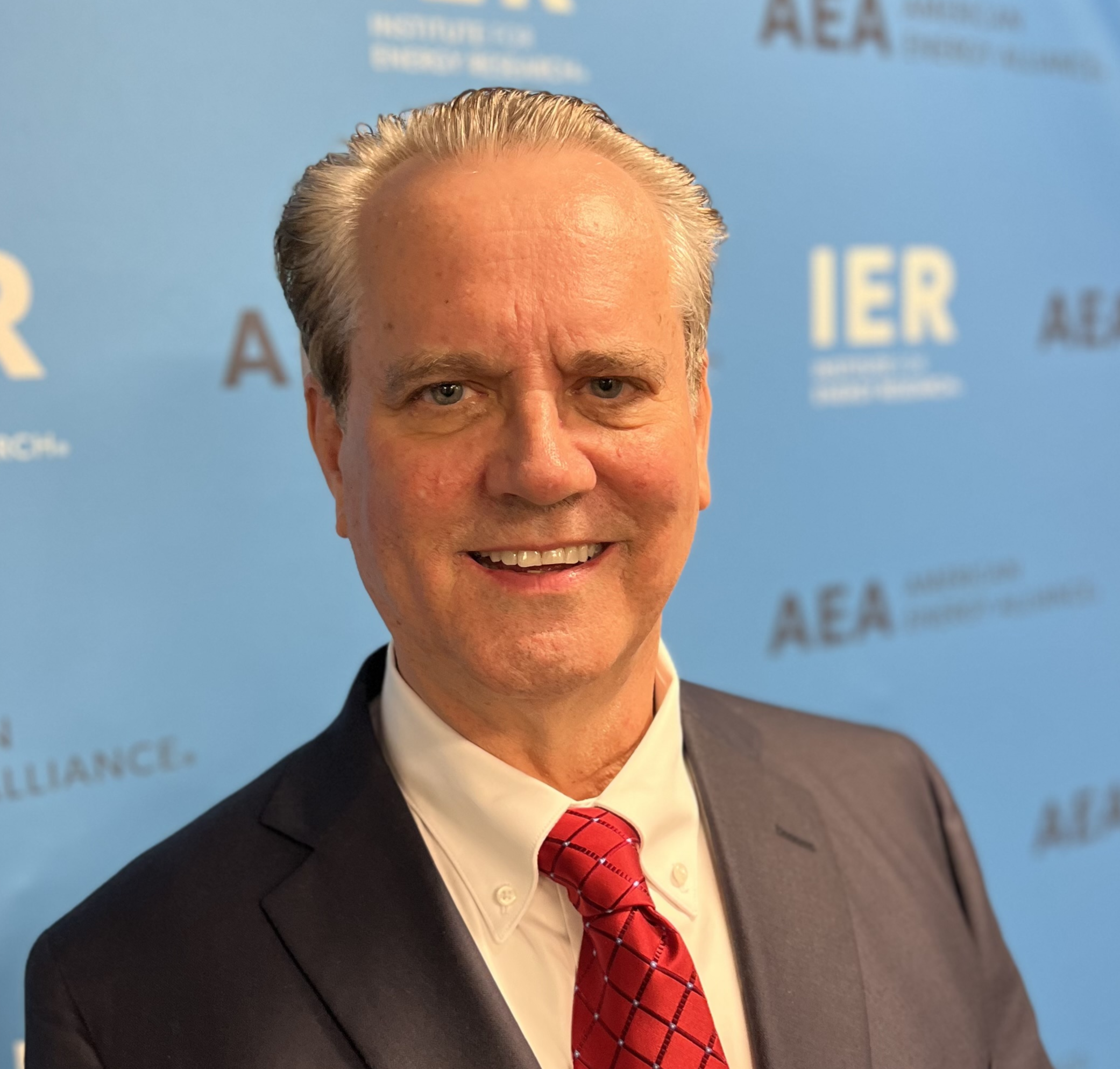
Robert L. Bradley Jr. has never chased trends or grants. He has followed the evidence—market signals, engineering realities, and the record of human progress under freedom. In doing so, he has educated generations of policymakers, students, and citizens about why energy abundance matters and how free markets deliver it best.
As the world confronts the practical limits of forced energy transformations, Bradley’s voice grows more essential, not less. His last five years exemplify a lifetime of principled advocacy: tireless, insightful, and increasingly validated by events. For that, and for the intellectual honesty that refuses to bend to fashionable alarm, we owe him profound gratitude. The energy debate is richer, clearer, and more hopeful because of Robert Bradley. Here’s to many more years of his indispensable contributions.
—————–
Stephen Heins writes at The Word Merchant, where this profile is one in a series on leading free-market energy/climate thinkers. Other profiles to date have been on journalist Kevin Mooney, Craig Rucker (CFACT), Benny Peiser (GWPF), Susan Crockford, Gregory Wrightstone (CO2 Coalition), Tom Nelson, Jason Spiess (Bakken historian), Joseph Bast (Heartland Institute), Paul Driessen (author), Magatte Wade and Jusper Machogu (African reform), Anthony Watts (WUWT), Jim Willis (Marcellus and Utica historian), Geoff Simon (North Dakota energy champion), Nicole Jacobs (Energy in Depth), Energy Corps (Toby Rice, Scott Tinker and Tisha Schuller), and Anne Hyre (Bettering Human Lives Foundation.