Energy: Rulers vs. The People
By Bill Peacock -- March 4, 2026“All renewable energy—driven by Climate Change Madness—has done for us is to make electricity more expensive. One example of that is the $318 billion in federal renewable subsidies taxpayers have paid for over the last 16 years.”
On May 26, 1285, Edward I of England commissioned Roger de Northwode, John de Cobbeham, and Henry le Galeys to investigate the use of “sea-coal” in lime kilns in London and its suburbs. The commission was driven by complaints “that whereas formerly the lime used to be burnt with wood, it is now burnt with sea-coal, whereby the air is infected and corrupted to the peril of those frequenting and dwelling in those parts” (Edward I, 1285, 207).
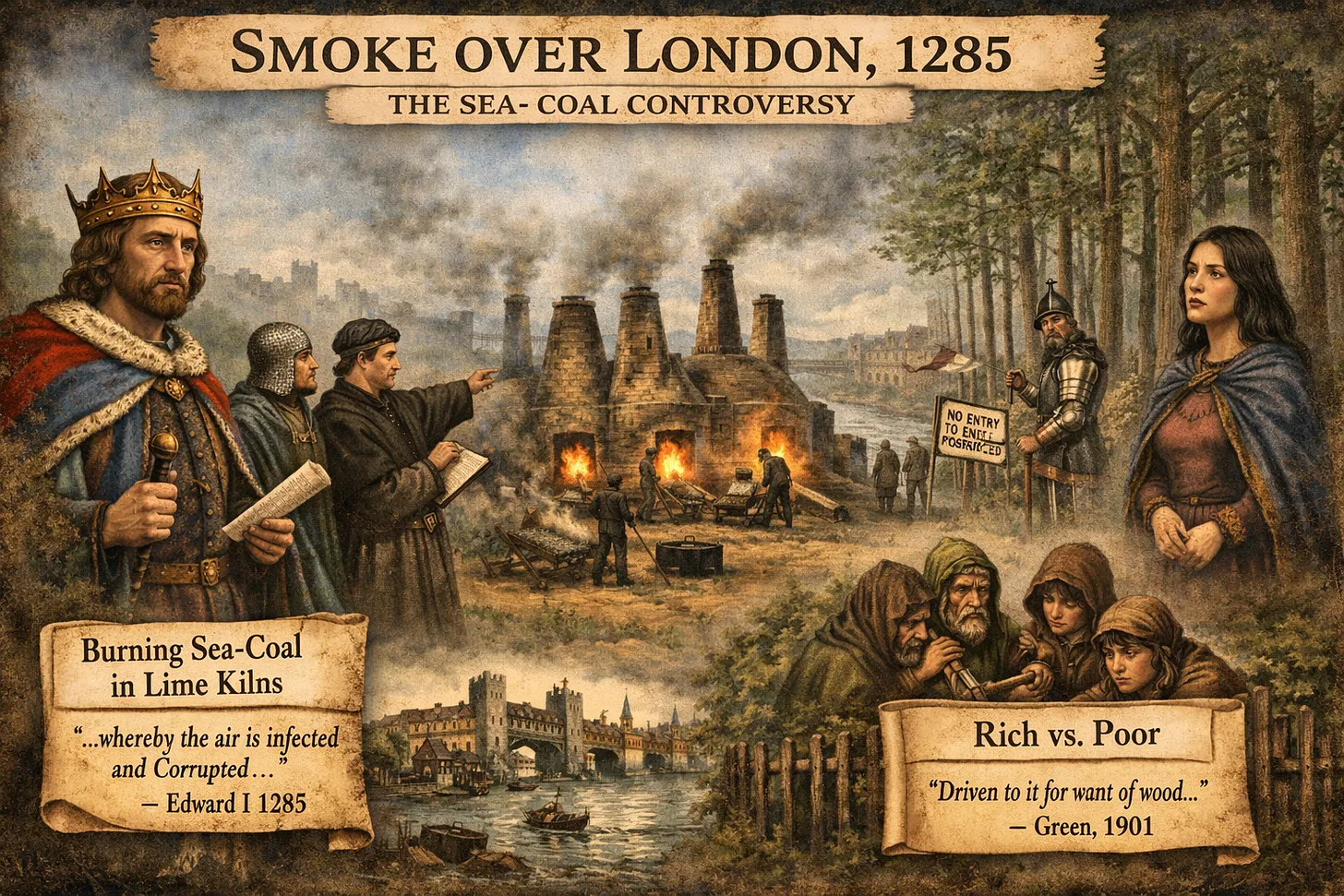
This was not the first time Edward and his family had dealt with what we know today simply as coal. In 1257, his mother Eleanor was forced to leave Nottingham Castle because “she found it impossible to stay there by reason of the smoke from the sea coal” (Green, 1901, 378). About 15 years later, Edward had (unsuccessfully) banned the burning of seal-coal in London “on the urging of important noblemen and clerics” (Urbinato, 1994). The rich were upset at the smog resulting from the heavy use of sea-coal for heating by commoners, who were driven to it as wood became scarce and more expensive due to population growth and restricted access to forests.
Describing this situation from an economic perspective, we can say that 13th-century energy consumers turned to a substitute product (sea-coal) for heating because wood prices had increased due to high demand in the face of decreasing supply. The subsequent interventions of Edward I and later monarchs into the nascent British energy market may have reduced smog in London, but they came at the cost of making most of their subjects poorer, colder, and less adequately housed. A reduction in the standard of living is not the outcome society should expect from its rulers as they perform their duties. Civil government officials do have authority to protect the health of their citizens.
However, responses of officials across the world to COVID-19 reminds us that the actions of rulers—be they medieval kings or modern bureaucrats—do not always benefit their citizens. In large part, this is because they approach public health (and other) concerns with pride and arrogance, often revealed by their failure to seek wide counsel from people outside their own spheres of expertise rather than with wisdom and justice.
Prideful rulers often ignore or oppose their citizens’ “unalienable Rights,” including “Life, Liberty and the pursuit of Happiness,” to use the words of America’s Declaration of Independence as they force what they want on everyone else.
This assault on rights—and correspondingly on energy markets—most often results not only in a lower standard of living but also in the failure of regulators to achieve their intended goals. All renewable energy—driven by Climate Change Madness—has done for us is to make electricity more expensive. One example of that is the $318 billion in federal renewable subsidies taxpayers have paid for over the last 16 years. Meanwhile, the electric grid has become less reliable as it has been flooded by energy sources that on average work less than half the time. This is wealth that has been diverted from improving living standards, paying for health care, etc.
The harm to human health and prosperity caused by the substitution of the preferences of politicians and regulators for those of millions of subjects, citizens, and consumers is incalculable. Yet even a cursory review of economies where substantial restrictions on rights and markets are endemic establishes that the harm is real and continues to this day.
Gary North explains what happens when politicians think they can change reality merely by passing a law: “One of the fundamental principles of all systems of economic theory is this: ‘You can’t get something for nothing.’ Christianity teaches that God offers saving grace to some people without cost to them. But this grace, in Christian doctrine, is based on the high price that Jesus Christ paid at Calvary. ”Most politicians believe they can avoid—or ignore—the high price of increased prosperity and advances in human health throughout history have come though the messy business of people exercising their God-given rights through markets. But they can’t.
People making their own choices and expressing their own preferences in markets enables them to absorb information and convert it to useful means of satisfying their needs and wants. Though costly, only in this way has mankind been able to build up enough capital to access the tremendous benefits of the modern economy, including energy stored in fossil fuels.
Since well before Edward I, rulers and experts have attempted to clean up the mess of humanity—for many reasons, including concerns about diminishing supplies of fuel, pollution, or climate change—by substituting their judgments for those of common citizens. But these efforts are destined to fall short and leave humanity in a worse state. The moral and most effective way to improve the condition of mankind and their planet is through man’s exercise of his “unalienable rights” through markets, including energy markets.