About
MasterResource is a forum about energy markets and public policy. Precisely because energy is the lifeblood of the modern economy – the “master resource” that affects the production and use of all other resources – energy markets are often thought of as “different” and thus deserving of special political direction. We believe that the economic rules governing energy are no different from those governing other markets and are thus skeptical about government intervention. Drawing on this perspective, MasterResource hopes to better inform the energy debate in a civil but forceful manner, without recourse to political partisanship or ideological cant.
More than two hundred authors have contributed to MasterResource since its founding in late 2008. Each author’s analysis and opinion are that person’s alone and do not necessarily represent the views of other authors and that of the Institute for Energy Research.
MasterResource welcomes comments of substance that are on-topic and in good taste. MasterResource comments that are cross-posted elsewhere by the author should follow the same standard for comment privileges.
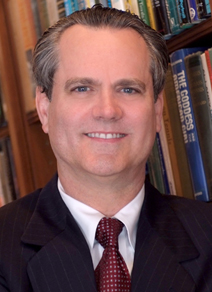
Rob Bradley’s interest in energy began when he prepared a study on the oil-reseller boom for a Houston bank in 1980. This investigation into the interplay of business and 1970s oil price and allocation regulation led him to apply for a grant from the Cato Institute to write a history of U.S. oil and natural gas regulation, an anticipated 18-month project that turned into five years of full-time effort. After nearly a decade of trying to find a publisher for the 2,000-page tome, Oil, Gas, and Government: The U.S. Experience was published in two volumes in 1996 by Rowman & Littlefield. That beginning was followed by 16 years in the energy industry. In 1985, Bradley joined HNG-InterNorth (soon to be renamed Enron) as a Houston-based analyst with Transwestern Pipeline Company, which sold natural gas to the California market. An interstate gas transmission company, Transwestern was regulated by the Federal Energy Regulatory Commission (FERC), which provided Bradley with an education into cost-of-service, public-utility regulation. With natural gas as the swing fuel in California’s electricity generation, Bradley also became conversant with the electricity market and public-utility regulation of gas and electricity on the state level. The California Public Utilities Commission was also active in environmental programs, as was the California Energy Commission. In 1995, Bradley left Transwestern to become director of public policy analysis at Enron, a corporate staff position. A primary job was preparing speeches for chairman and CEO Ken Lay, but Bradley also was involved in legislative and regulatory issues. It was here that he became very involved in the internal debate over global warming strategy and renewable energy. His criticism of climate alarmism and Enron’s “political capitalism” is evidenced by memos posted on the website, www.politicalcapitalism.org. Today, Bradley is the founder and CEO of the Institute for Energy Research; a senior fellow at the American Institute for Economic Research (AIER); and a fellow of the Institute of Economic Affairs in London. He is the author of eight books on energy history and public policy. His current book project is Energy and Leviathan: A Political Economy Primer. His website, www.politicalcapitalism.org, is dedicated to his multi-volume history of the rise and fall of Enron.
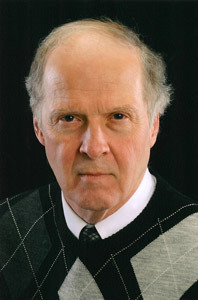
Roger Donway has for 35 years been a professional editor of scholarly publications. He studied philosophy at Brown University as both an undergraduate and graduate student, and has written two books in the field of business law, as well as several hundred printed articles on a wide variety of topics, from genetics to poetry. He is keenly optimistic about the future of energy, particularly the open-ended prospects for nuclear power.
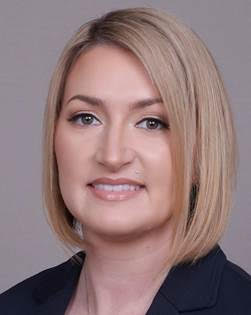
Kassie Andrews is an energy expert on Alaskan politics and resource development. A lifelong Alaskan, her career in energy has involved project management, construction, and finance.
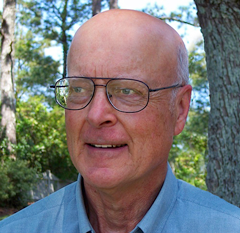
John Droz Jr. is the founder of Alliance for Wise Energy Decisions (AWED), a 10,000-member international coalition promoting science-based energy and environmental policies. Mr. Droz received undergraduate degrees in Physics and Mathematics from Boston College, a graduate degree in Physics from Syracuse University, and has been a Mensa member. He worked for GE Aerospace Electronics, Mohawk Data Sciences, and Monolithic Memories. After retiring at age 34, he has focused on educating citizens about energy and environmental issues. John has been a guest speaker on dozens of radio and TV shows nationwide, as well as lectured to numerous organizations on energy and environmental issues. In addition to publishing more than one hundred articles on energy policy, Droz has testified before the North Carolina legislature and the U.S. House of Representatives Science & Technology Committee.
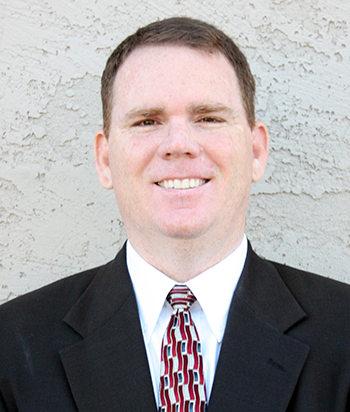
CRAIG D. IDSO is the founder and CEO of the Center for the Study of Carbon Dioxide and Global Change, a non-profit public charity dedicated to discovering and disseminating scientific information pertaining to the effects of atmospheric carbon dioxide enrichment on climate and the biosphere. The Center produces the online newsletter, CO2 Science, and maintains a comprehensive online collection of editorials on and reviews of peer-reviewed scientific journal articles relating to global climate change. Dr. Idso's research has appeared many times in peer-reviewed journals, including Geophysical Research Letters, Environmental and Experimental Botany, Forest Ecology and Management, Journal of Climate, Physical Geography, Atmospheric Environment, Technology, The Quarterly Review of Biology, Energy & Environment, and the Journal of the Arizona-Nevada Academy of Science. He is the author or co-author of The Many Benefits of Atmospheric CO2 Enrichment (Vales Lake Publishing, LLC, 2011); CO2, Global Warming and Species Extinctions (Vales Lake Publishing, LLC, 2009); CO2, Global Warming and Coral Reefs (Vales Lake Publishing, LLC, 2009); Enhanced or Impaired? Human Health in a CO2-Enriched Warmer World (Center for the Study of Carbon Dioxide and Global Change, 2003); and The Specter of Species Extinction: Will Global Warming Decimate Earth's Biosphere? (George C. Marshall Institute, 2003). He contributed chapters to McKittrick, R. (Ed.), Critical Topics in Global Warming (Fraser Institute, 2009) and Encyclopedia of Soil Science (Marcel Dekker, 2002). Dr. Idso has also produced several short video works and three feature-length documentaries, Carbon Dioxide and the Climate Crisis: Reality or Illusion? (2008), Carbon Dioxide and the Climate Crisis: Avoiding Plant and Animal Extinctions (2008), and Carbon Dioxide and the Climate Crisis: Doing the Right Thing (2008). Dr. Idso received a B.S. in Geography from Arizona State University; an M.S. in Agronomy from the University of Nebraska – Lincoln; and a Ph.D. in Geography from Arizona State University.
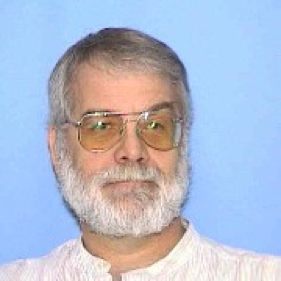
Mark Krebs is a mechanical engineer by training with over thirty plus years of broad experience managing both natural gas and electricity energy efficiency programs for several major utilities. Mark’s unique perspectives were summarized by MasterResource in June 2016 by the following article: • Mark Krebs: Digging Down on Energy Efficiency Claims (an interview) Some examples of Mark’s publications (besides those published here) include: • “It’s a War Out There: A Gas Man Questions Electric Efficiency” (Public Utilities Fortnightly December 1996). • “Fundamentals of Desiccant Dehumidification Technologies in Commercial Air Conditioning Systems,” (Improving Building Systems in Hot & Humid Climates, October 9-10, 1990). Mark is presently employed by Spire Inc. (formerly the Laclede Group and Laclede Gas before that) where he has been since 1994. Please note that Mark’s comments do not necessarily represent the official positions or policies of Spire or anyone else for that matter.
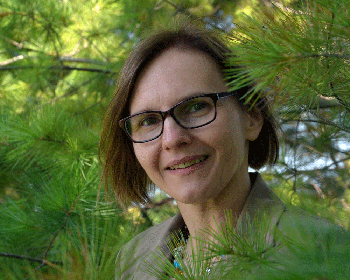
Joanna Szurmak of the University of Toronto Mississauga is co-author (with Pierre Desrochers) of Population Bombed!, shortlisted for the 2018-2019 Donner Prize for best public policy book written by Canadian authors. Her associations in the liberty movement include Fraser Institute, Institute for Humane Studies, Institute for Liberal Studies, Liberty Fund, and Society for Academic Freedom and Scholarship. Joanna holds three degrees from the University of Toronto: a Bachelor and Master's of Applied Science, Electrical Engineering, and a Master's in Library and Information Studies. She is currently at the dissertation stage of her doctorate in Science and Technology Studies, York University (Toronto, Canada), on the impact on economic thought of the work of urban theorist Jane Jacobs.